Chandler Water Damage Restoration for Monsoon Nights and Everyday Leaks
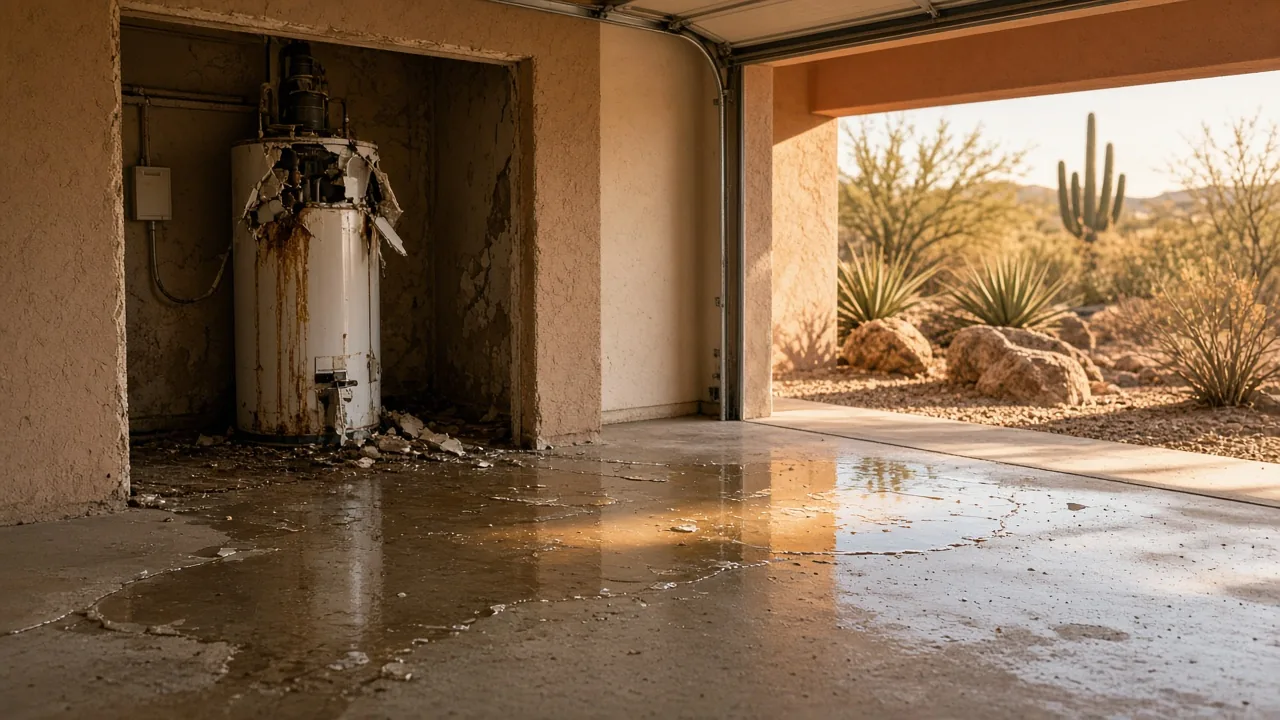
A desert city still floods indoors. Most of our chandler water damage restoration calls start with plumbing, like a water heater that finally split or a softener line that let go behind the garage wall, and a smaller number start with the sky during monsoon season. Either way, we extract the water, dry what can be dried, replace what can't and document it for your insurer.
If water is moving right now, call (480) 555-0112. We'll help you find the shutoff first.
Prefer to talk? (480) 555-0112
What happens when you call
- 1
Tell us what happened
Call (480) 555-0112 and describe where the water came from and which rooms are affected.
- 2
Schedule the assessment
We follow up to confirm the details and set an inspection time that works for you.
- 3
Water out, structure dried
Water is extracted, moisture is measured and the structure is dried before repairs begin.
Dry Climate, Wet Rooms
Low outdoor humidity helps drying, but it doesn't help water you can't see. Water runs under baseboards, into the bottom plate of walls and beneath vinyl plank and tile. Chandler's houses are mostly recent: the Census Bureau's 2024 estimate puts the median build year at 1998, with about 45 percent of homes built in 2000 or later and fewer than one in ten before 1980. That means slabs, drywall and builder-grade fittings of roughly the same age, wearing out around the same time.
The Morning Chandler Got Six Inches
The monsoon, as the National Weather Service defines it for the Southwest, runs from June 15 to September 30. Most storms are short, but some aren't. On September 8, 2014, moisture from Hurricane Norbert brought heavy rain to the East Valley starting around 2 a.m. Some Chandler locations recorded nearly 6 inches, and a trained spotter in northwest Chandler measured 6.09. The Weather Service's event page shows flooding near Dobson Road and the Loop 202, at Ocotillo and McQueen, and at Warner and Arizona Avenue.
Hard Water and the Hardware It Wears Out
Chandler's 2025 water quality report lists total hardness from 10.1 to 16.8 grains per gallon. The City notes hardness isn't a health concern, but minerals do build up in tanks, valves and appliance fittings over the years. Scale is one reason water heaters, softeners and supply valves are the parts we see fail most.
Services in Chandler
- Monsoon storm damage cleanup in Chandler, for roof leaks, wind-driven rain and runoff at the door.
- Water heater leak cleanup for Chandler homes, for garage, closet and attic tanks.
- Mold remediation in Chandler, AZ, when a slow leak went unnoticed.
Monsoon Storm Damage
Wind, dust and a burst of rain can open a Chandler roof or push runoff under the door. We dry out monsoon storm damage and rebuild. Call our crew.
Learn moreMold Remediation
Mold in a Chandler home almost always traces back to a hidden leak. We locate the moisture, contain the area, remove growth and dry it out. Call now.
Learn moreWater Heater Leaks
A leaking or burst tank in a Chandler garage, closet or attic can soak walls fast. We shut it down, extract, dry and repair the damage. Give us a call.
Learn more
What Happens on a Chandler Job
- Stop and make safe. Source off, breakers checked.
- Extract. Standing water out of carpet, tile and slab.
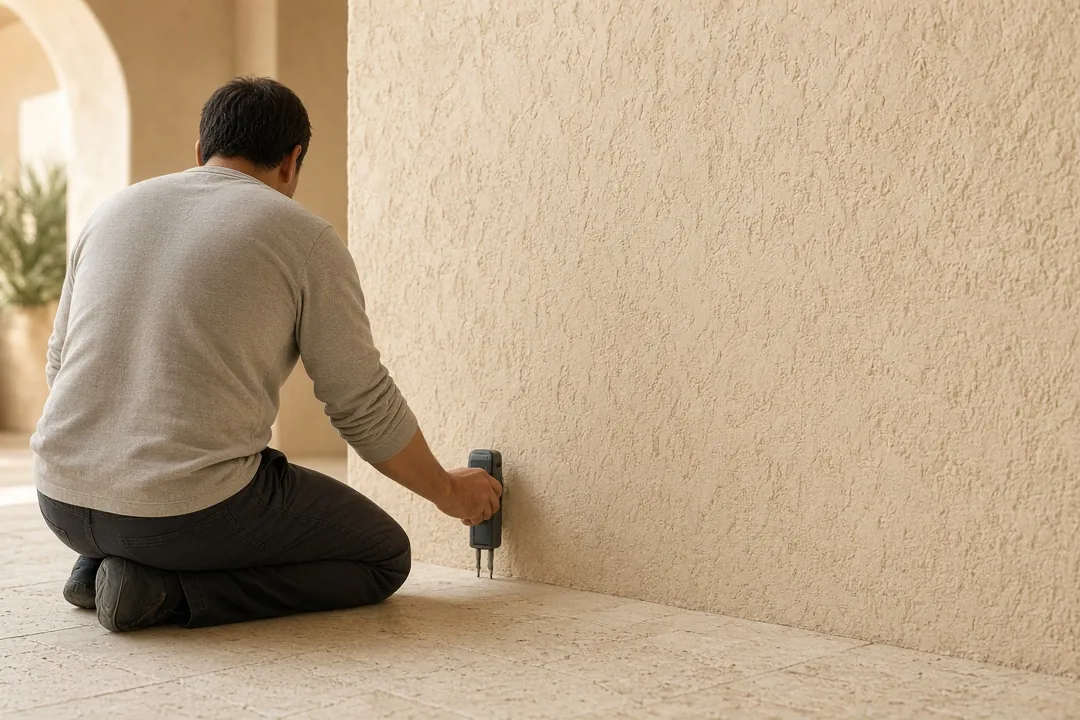
- Measure. Meters and thermal imaging trace water under floors and into walls.
- Remove selectively. Wet pad, baseboard and the lower strip of drywall if readings call for it.
- Dry. Air movers and dehumidifiers, checked each morning.
- Rebuild. Drywall, texture, paint, flooring and trim.
Chandler Local Notes
Chandler was founded in 1912, and the City adopted its historic preservation program in 2020. Its first designation, in 2022, was the Southside Village Historic Conservation District, recognizing the city's original African-American and Latino communities. The Silk Stocking neighborhood and the blocks around the San Marcos Hotel downtown are among the city's older housing.
Beyond downtown, we work across Chandler, including Ocotillo, Fulton Ranch and the neighborhoods along the Loop 202 and Arizona Avenue.
One call starts it: (480) 555-0112.
Frequently asked questions
Does a like-for-like water heater swap need a permit in Chandler?
The City's homeowner permit manual lists like-for-like replacement of residential water heaters among the work that doesn't require a building permit. Moving or upsizing it is a different story, so check with the City.
Is monsoon rain through the roof covered differently from a pipe leak?
Often, yes. Policies treat storm and plumbing losses differently, so photograph the roof and the source and ask your agent.
Will drywall need to come out?
Only if readings show it's wet past the point of drying in place, or if the water was dirty.